Famous Hetaira: Elite Women Without Permission

icon

Welcome to BankModels Premium Introduction Service for Upscale Daters Worldwide.

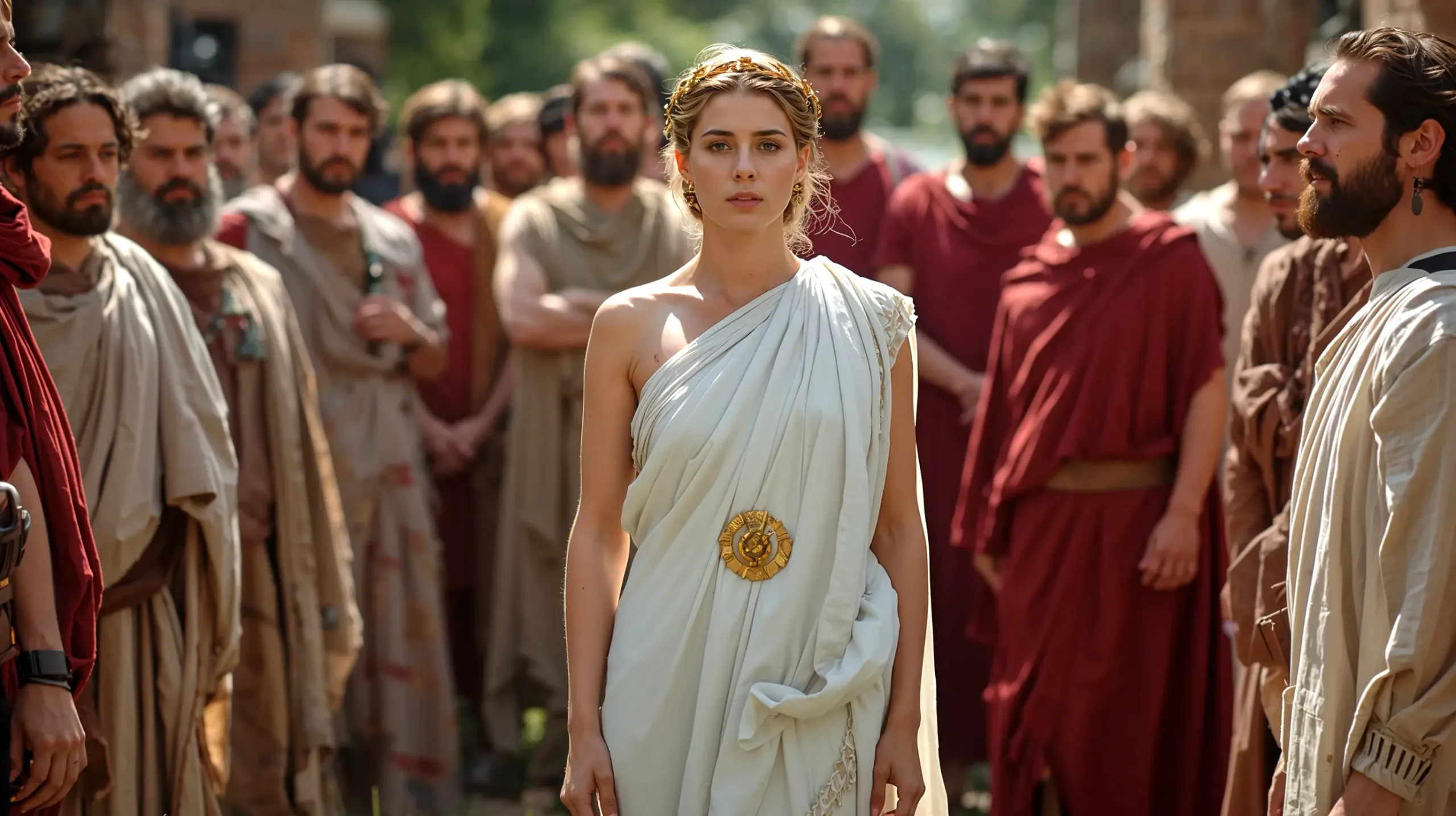
hetaira definition inspired image of an ancient Greek woman in a white toga standing in a classical garden

Hetaira definition: a woman beyond the rules


When people speak about this ancient phenomenon, they usually think of men. And that is already a mistake. The hetaira definition in ancient Greece was never limited to companionship — it described a rare form of female freedom.

These elite women did not hide behind domestic walls, did not lower their voices in male company, and did not live by a script written by society. They appeared where ideas were shaped, where arguments mattered, and where influence was quietly exercised.

Their backgrounds varied — former slaves, foreigners, or free-born women — yet the outcome was the same: independence. Acting as a VIP companion in elite circles meant choosing where to go, whom to engage with, and how to live on one’s own terms.

In a world where silence was considered a feminine virtue, these free women claimed presence. That is precisely why they provoked admiration, discomfort, and fascination — and why their legacy still resonates centuries later.
Elite Women Influence


Famous hetaira were among the first women to dare to think out loud — and to do so in public. In a world where female silence was considered a

virtue, these elite women chose knowledge. They studied rhetoric, poetry, music, and philosophy not for decoration, but for influence. Their

education was shaped at tables where politics, art, and power were discussed — and it was there that early feminism quietly began, long before it

had a name or a manifesto.

The independent woman did not ask for permission to speak — she simply did. Sometimes gently, sometimes with irony, sometimes with such

precision that the direction of the conversation suddenly shifted. A new reality emerged: woman as a thinking subject, not a beautiful accessory to a

man. Not a decorative vase at a symposium, but an active participant in dialogue. And if someone arrived merely to look, they often stayed to

listen. It was at that moment that the familiar order began to crack.

How Did Hetairai Look


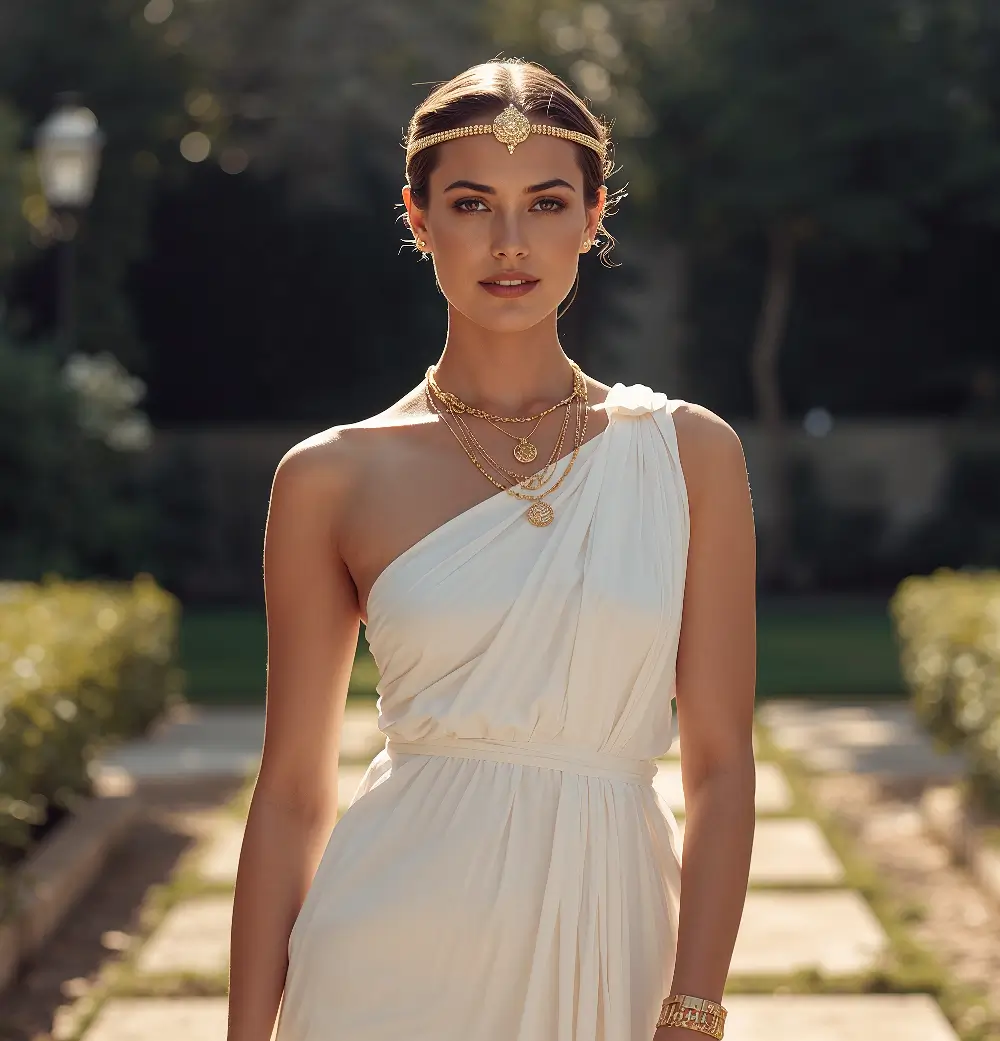
According to the hetaira definition, these women never followed a single visual template — there was no “uniform.” Unlike wives, who were expected to appear modest and almost invisible, hetairai could afford individuality. They paid close attention to self-care: skin, hair, scent, posture, and voice all mattered. Clothing was elegant rather than provocative. What truly distinguished them was their ability to present themselves — through a glance, an intonation, a pause.

Beauty was valued not as static appearance but as living presence. Ancient writers often noted that a famous hetaira became most captivating in conversation — when she spoke, sang, or laughed. Attraction emerged through interaction, not silence.

Although hetairai occupied a unique place in ancient society, they are often mentioned alongside elite courtesans of later historical periods. While the contexts differ, both figures share a common thread: education, social intelligence, and influence within elite circles. A deeper comparison between hetairai and elite courtesans — their similarities, differences, and cultural roles — is explored in a separate article.

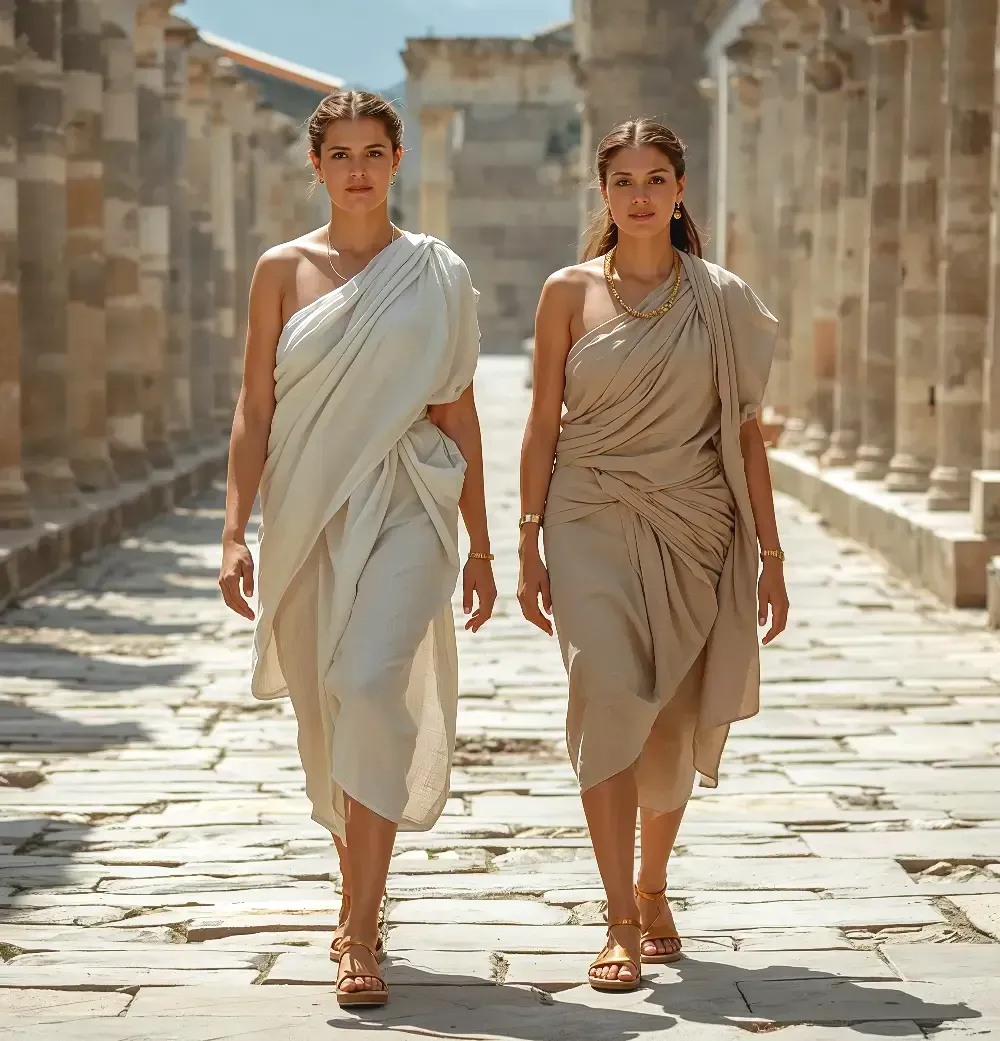
Two elegant women walking together

Education of Elite Women or  Education and Training


It is important to clarify: there were no official schools for hetairai — this is a myth. Education was practical and gradual, shaping the skills

necessary for life within an elite environment.


The main paths of learning included:


● living in the household of a more experienced hetaira;

● mentorship provided by patrons and protectors;

● observation and active participation in symposia;

● private lessons with tutors in music, rhetoric, poetry, and literature.


These elite women learned through life itself — by listening, observing, imitating, and experimenting. Mistakes were part of the process, not a sign

of failure.


From Nothing to Independence


This part of the story is particularly revealing.

Many elite women began with no financial resources at all — former slaves, freedwomen, or foreigners. What they lacked in money, they

compensated for with qualities that could not be purchased: observation skills, memory, the ability to listen, and a fast-learning mind.


The typical path often looked like this:


● a young woman was noticed by a more experienced famous hetaira or a patron;

● she received housing, protection, and access to elite social circles;

● learning took place through people rather than through books;

● over time, she achieved independence.


This was a rare form of social mobility in antiquity — a genuine social elevator in a world with very few of them.


The Key Difference


Famous hetairai did not “prepare for life.”

They learned how to exist on equal terms in a male-dominated world, while most women were excluded from it.

That is why they became a cultural phenomenon rather than a profession. As VIP companion figures within an elite lifestyle, they were among

the first to demonstrate that a woman could enter society not as decoration, but as a fully formed individual.

A hetaira was an educated and socially influential woman in ancient Greece
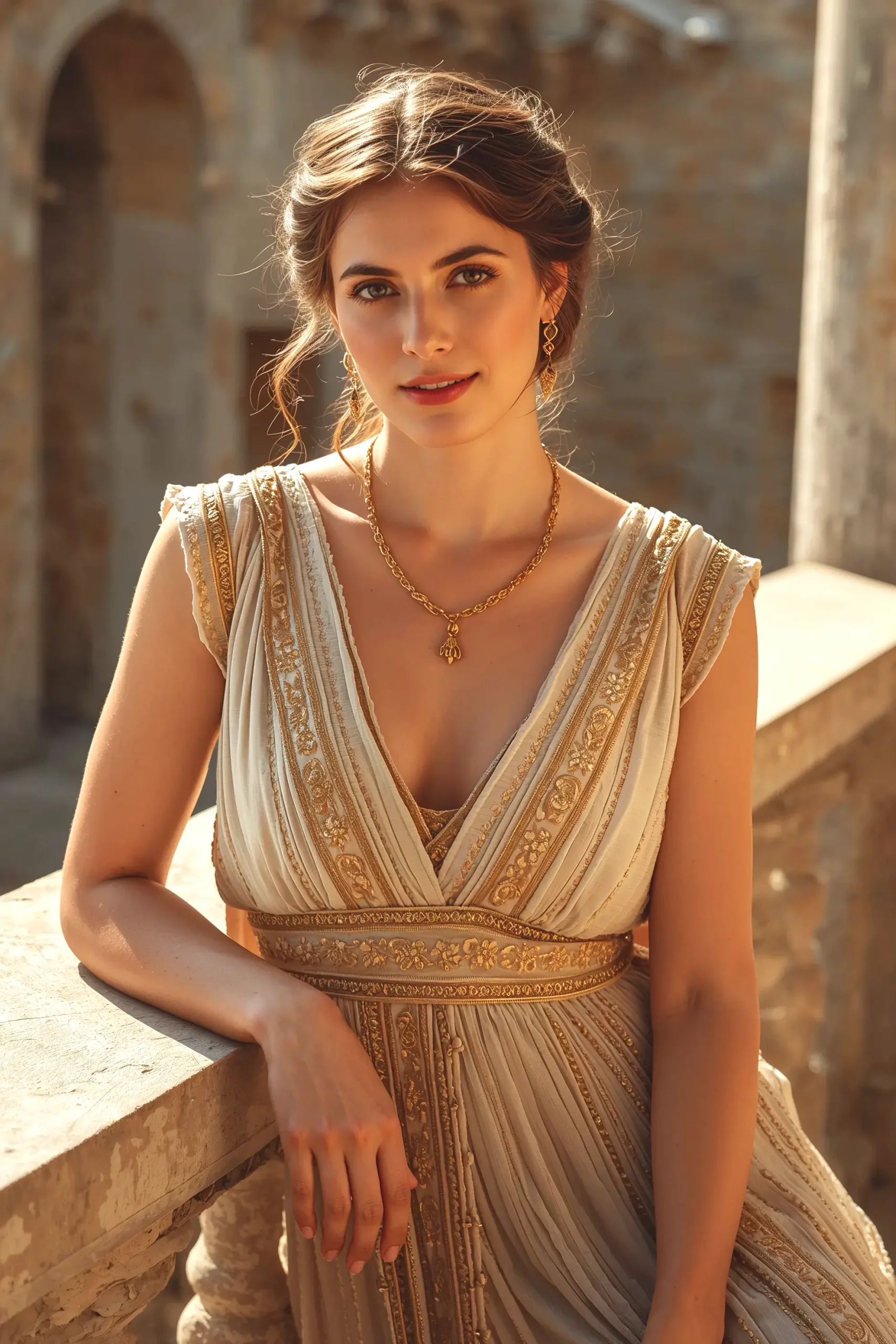
Ancient Greek elite woman in white and gold dress, famous hetaira portrait, blurred antique castle background

Aspasia of Miletus


  1. 470 BCE — c. 400 BCE

Aspasia was not merely a companion, but an intellectual partner of Pericles, the leader of Athens during its “Golden Age.” Originating from Miletus, she was highly educated, possessed exceptional rhetorical skills, and, according to several ancient authors, influenced political decisions.

Her home became a space for philosophical discussion, frequented by thinkers, politicians, and associates of Socrates, placing her among the most notable elite women of her time.

Story: the trial of a woman who spoke too well
Aspasia was accused of impiety — a standard charge used against those who became too influential. Formally, she was on trial, but in reality the attack was directed at Pericles.

According to ancient sources, Pericles personally appeared in court with an emotional speech — something he had never done before — thereby breaking political etiquette. Aspasia was acquitted. She prevailed not through beauty, but through intellect.

Facts:

– participated in philosophical discussions with Socrates;
– hosted politicians and thinkers in her home;
– mentioned by Plato and Xenophon as a woman of rare intellect;
– could not legally be Pericles’ wife, yet effectively became one.


Aspasia is an example of a famous hetaira as a woman of power through intellect rather than appearance.

Phryne


  1. 370 BCE — c. 330 BCE

Phryne was one of the most famous hetairai of Ancient Greece, a symbol of beauty and independence.

She was renowned not only for her appearance, but also for extraordinary wealth.

Phryne served as a muse to sculptors and artists, including Praxiteles, and was regarded as the ideal of feminine beauty of her era, standing among the most visible elite women in Greek society.

Story: the trial stopped by beauty
Phryne was accused of impiety — a serious crime punishable by death.

The court was close to delivering a verdict when her defender, Hyperides, took a desperate step and exposed her before the judges.

He declared that a woman whose beauty was a gift from the gods could not be condemned. The judges refused to take responsibility and acquitted her.

Facts:
– was one of the wealthiest women in Greece;
– served as the model for statues of Aphrodite;
– offered to rebuild the walls of Thebes at her own expense;
– chose her patrons independently.


Phryne represents the famous hetaira as a woman who possessed financial and social power, not merely an object of admiration.

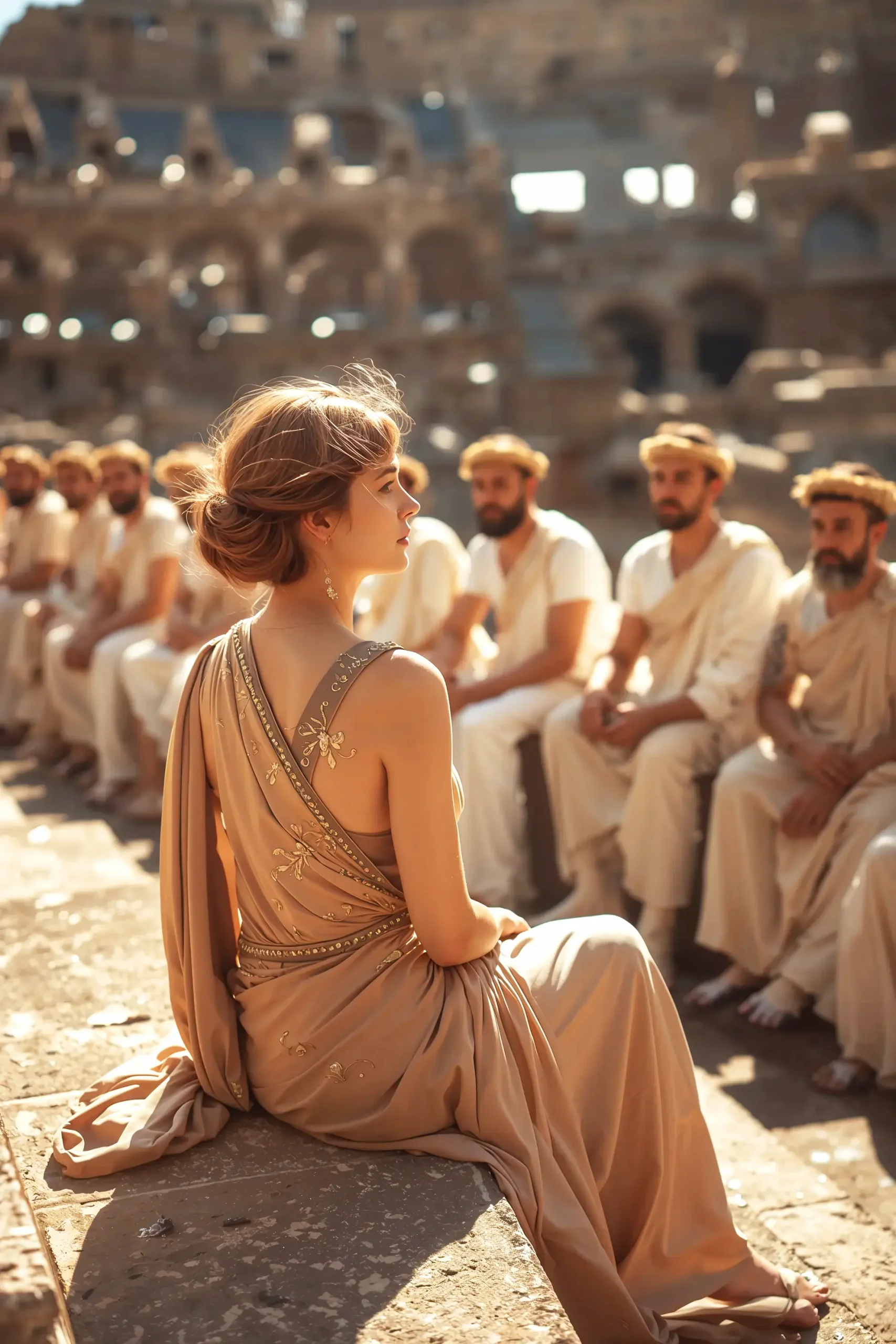
Ancient hetaira seated in coliseum, elite woman seen from behind, famous hetaira facing men with laurel wreaths, profile view
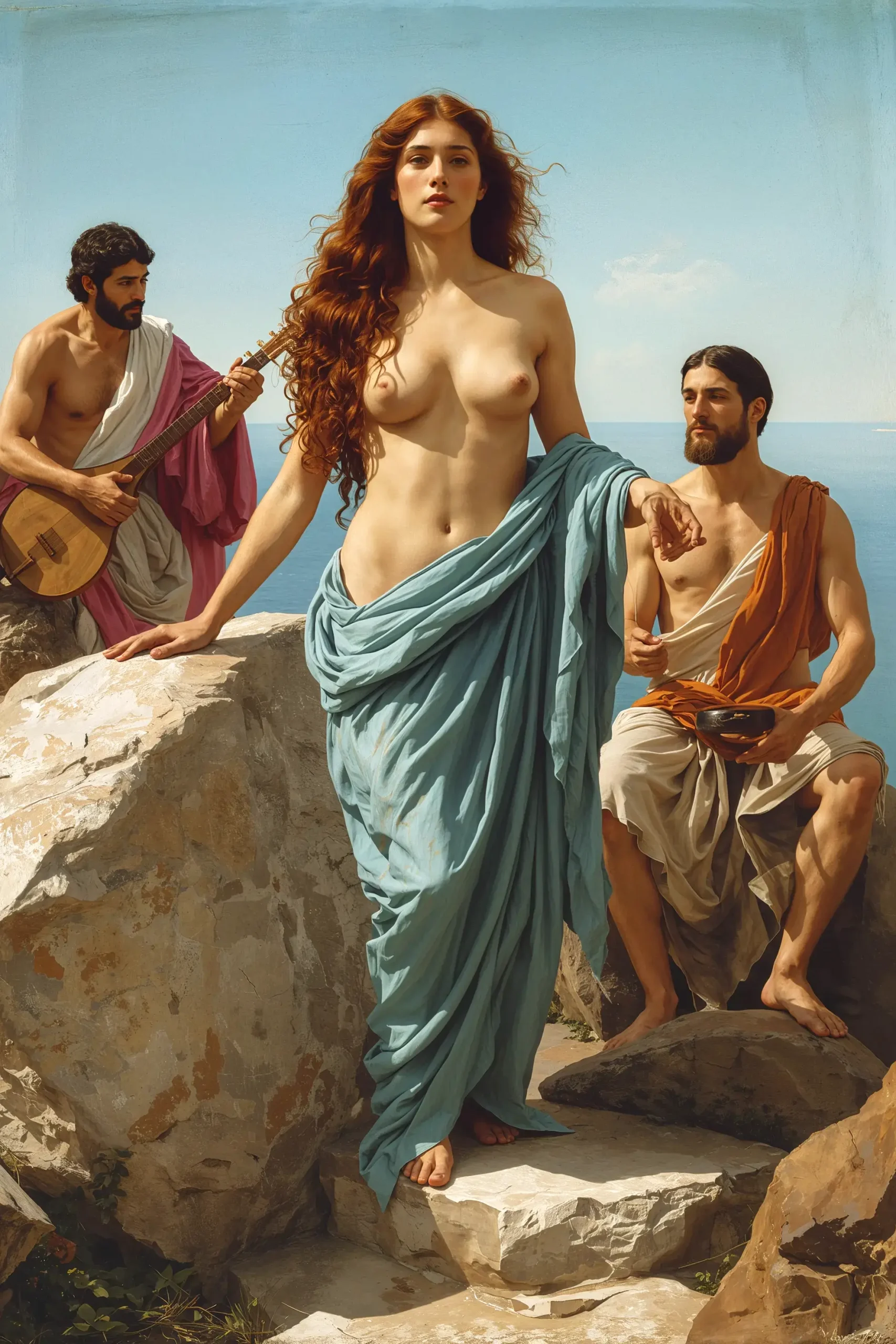
Ancient painting of famous hetaira topless with blue drapery, elite woman in hetaira Greece, men with string instrument

Lais of Corinth


  1. 425 BCE — c. 360 BCE

A hetaira of the elite — philosophers and rulers alike.

Lais lived in Corinth, a city known for the high status of hetairai.

According to the history, she embodied not only beauty but social autonomy.

She was famous for her sharp wit, cool independence, and the ability to keep distance even from the most powerful men.

Story: the refusal of a philosopher
The philosopher Aristippus pursued Lais for a long time. After finally receiving an invitation, he asked why she did not accept everyone.

Lais replied that she did not belong to anyone completely. Later, when Aristippus was reproached by his students for his relationship with a hetaira, he responded: “I possess Lais, she does not possess me.”

Facts:
– had admirers among philosophers and politicians;
– was known for her independent character;
– never bound herself by exclusive obligations;
– was considered the embodiment of inaccessibility.


Lais represents the image of a hetaira as a woman of choice rather than possession — a form of elite courtesan defined by autonomy, not attachment.

Archeanassa


  1. 400 BCE — c. 350 BCE

The muse of the philosopher Plato.

Archeanassa is known primarily for the fact that Plato dedicated an epigram to her — a rare gesture for a philosopher known for his restraint in personal expression.

This alone places her among the most remarkable elite women of her era.

Story: the philosopher and the hetaira
Plato, who deliberately avoided physical themes, described Archeanassa as the source of an intense, almost painful passion.

His verses speak not of the body, but of the attraction of mind and personality.

Through this episode, Archeanassa’s name was preserved within the philosophical tradition itself.

Facts:
– was connected to Plato’s philosophical circle;
– mentioned in ancient poetry;
– perceived as an object of intellectual admiration;
– entered history not through anecdotes, but through texts.


Archeanassa represents the hetaira as a muse of thought rather than a social role.

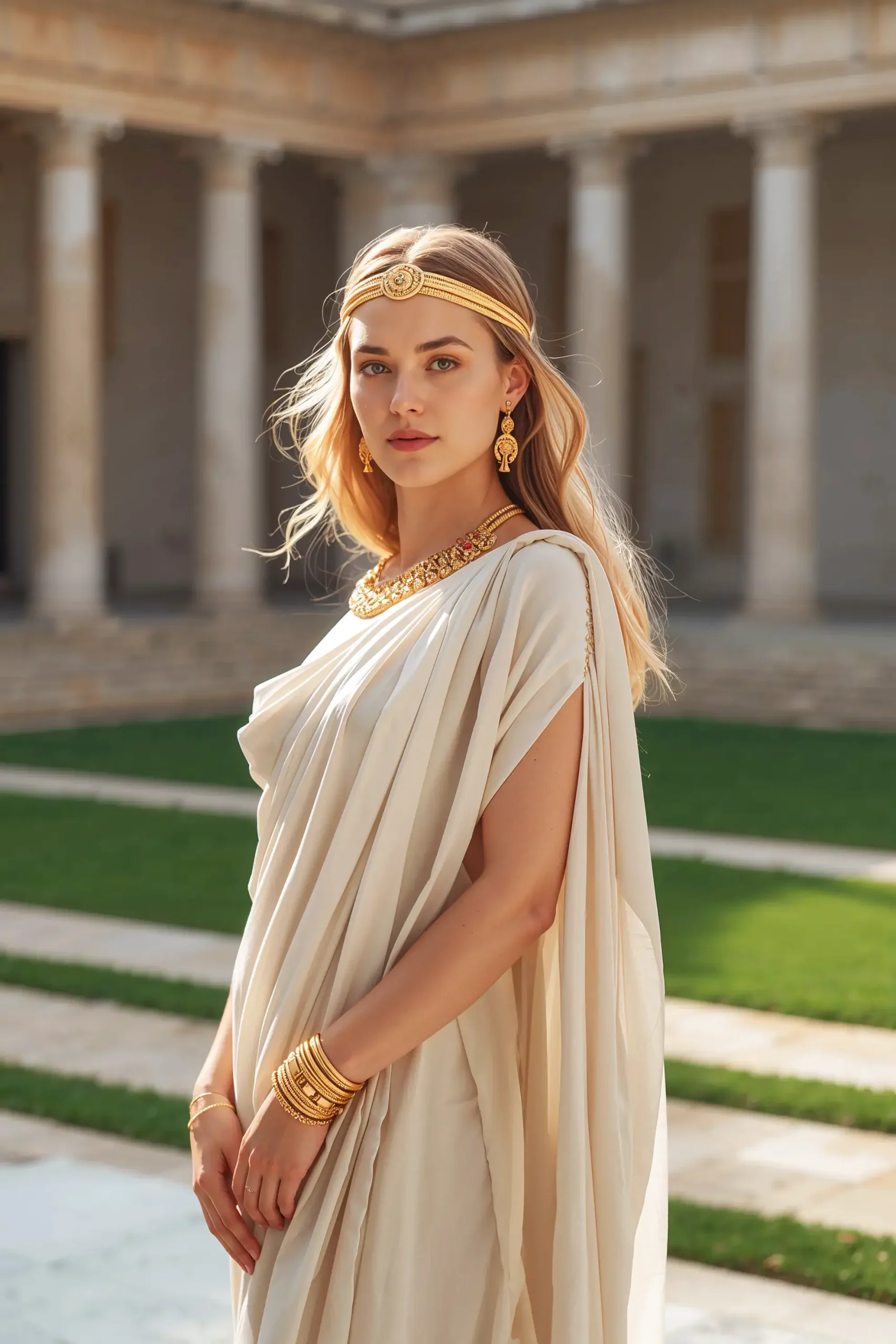
Blonde woman with elaborate gold jewelry in an ancient Greek setting, standing near stone columns
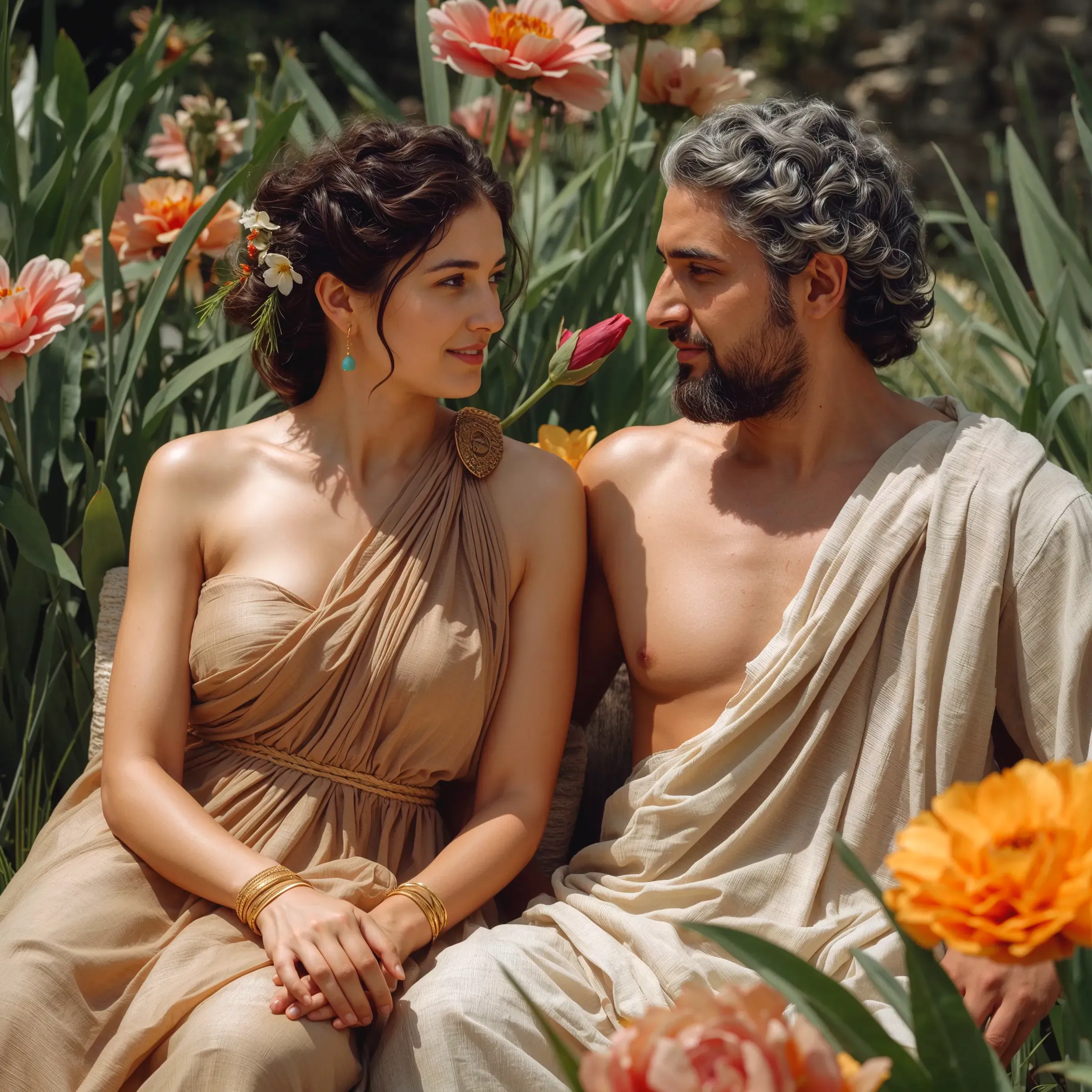
Elegant woman with a man, flowers in the background

Belistiche


  1. 300 BCE — c. 270 BCE

A hetaira who became a figure of state significance.

Belistiche was a companion of the Egyptian ruler Ptolemy II. According to the hetaira definition, her role extended far beyond private life, reaching into the sphere of political and public influence.

Story: the path to cult status
After Belistiche’s death, she was granted divine honors in Egypt — an extremely rare distinction for a woman of non-royal origin. She effectively crossed the boundary from a private individual to a symbol officially recognized by the state.

Facts:
– was a favorite of Ptolemy II;
– received cult veneration;
– became part of official ideology;
– held influence at court.

Belistiche represents the famous hetaira as a woman who crossed the line between the private and the political, transforming personal influence into public authority.

Gnathaina


A satirical hetaira and observer of society.

Gnathaina was known for her sharp tongue and her ability to mock male weaknesses with precision.

Her home became a center of intellectual life in Athens, attracting thinkers, politicians, and men who understood that conversation there could be as dangerous as it was entertaining.

She stood out among the elite women of her time not through beauty alone, but through wit and social awareness.

Story: rules for men
Gnathaina composed a set of table rules in which she ironically described her guests — their greed, foolishness, and self-importance.

Men feared appearing ridiculous in her presence, knowing that nothing escaped her attention and that every weakness could become material for satire.

Facts:
– known as a satirist and brilliant conversationalist;
– her home functioned as an intellectual salon;
– publicly criticized male behavior;
– used humor as a form of power.


Gnathaina represents the hetaira as a social mirror of her era, exposing society’s flaws through irony rather than submission.

Young woman in a blue dress with gold bracelets standing by the sea with flowers and an ancient man in the background

Elite Status


The hetaira functioned as an intellectual companion, chosen not for physical appearance but for intelligence, education, and the ability to hold

meaningful conversation. A famous hetaira was valued for her mind, cultural awareness, and conversational skill, which is why such women were

present in elite intellectual and political circles.


Why the Status of a Hetaira Was Elite


Hetairai belonged to a rare category of elite women. They had the right to:

— own property,
— remain independent,
— participate in public life,
— choose their relationships freely.

This level of autonomy set them apart from most women of the ancient world and defined their position within elite society.


The Difference Between Hetairai, Courtesans, and Modern Stereotypes


A hetaira was always associated with culture, aristocratic refinement, and intellect. According to the hetaira definition, there was no place for

vulgarity. Unlike later courtesans or modern stereotypes, the hetaira existed in a space shaped by education, conversation, and social influence.


The Hetaira as Inspiration for Modern Women


Today, the hetaira functions as a metaphor rather than a literal historical role. A modern hetaira represents an elite lifestyle built on elegance,

intellect, and independence — a woman who defines her own standards and priorities.

Elegant woman surrounded by men, representing a famous Heitara figure

Hetairai and Early Female Freedom


Hetairai were among the first women in Europe to live according to their own choices. Within the circle of elite women, they demonstrated that

freedom could be achieved through intellect, autonomy, and personal agency.

Reading the stories of these women, it is impossible not to feel respect — and even admiration. In a world where inequality was not an abstract

concept but a daily reality, they managed to claim dignified positions in society. Not through rebellion, and not through

submission, but through intellect, choice, and personal conviction.

They were independent in their judgments and actions, unafraid to speak, think, and influence. Many consciously chose freedom over marriage,

personal development over roles imposed by tradition. They understood the cost of solitude — but understood even better the cost of a life without

freedom.

For me, these women are more than historical figures. They are proof that strength can be quiet, influence subtle, and freedom an internal state

rather than a permission granted from outside. They lived as they saw fit long before the world began to debate a woman’s right to her own path.

And perhaps that is precisely why their stories still feel strikingly modern today.

HETAIRA DEFINITION FAQ

Q: What is the hetaira definition?


A: The hetaira definition comes from Ancient Greece. A hetaira was an educated and independent woman, valued for intelligence, conversation, and social skills, not only for appearance.

Q: What do ancient hetairai and modern women represented by BankModels have in common?


A: Both share independence, confidence, and strong communication skills. They know how to present themselves, respect boundaries, and feel comfortable in high-level social settings.


Q: Why is the concept still relevant today?


A: Because it reflects timeless qualities: intelligence, emotional awareness, and personal freedom — traits that matter just as much in modern society.


Q: How is the hetaira image understood today?


A: Today, hetaira is a cultural idea rather than a role. It describes a woman who combines elegance, independence, and social intelligence.